Write Sounds Intervention Project:
One aspect of Dr. Bazis’ work focuses on developing interventions for students with dyslexia or word-level difficulties in K-6. These interventions incorporate known evidence-based practices while continuing research to develop new instructional strategies or combinations of instructional strategies that will begin to turn the tide and meet the needs of our students with reading and writing difficulties (including those with and without learning disabilities).
The Write Sounds Intervention Project aims to increase the efficiency and effectiveness of an intervention that integrates foundational and transcription component skills with evidence-based practices to increase handwriting, spelling, and word reading skills for students with or at risk for specific learning disabilities. Write Sounds integrates evidenced-based instructional components (e.g., explicit letter(s) instruction, letter-sound correspondence, repeated practice, and writing fluency) to teach handwriting and phonemic awareness skills embedded in spelling and reading at the word and sentence level. As part of the development process, the Dr. Bazis has tested various aspects of the Write Sounds intervention with promising results.
The research team has completed data collection for several supporting projects, including a systematic review on assessment and identification for students with dysgraphia and language-based learning difficulties and a meta-analysis focused on multi-component interventions. We have already completed two iterations of the intervention development process 1) Pilot studies (single-case and group design) completed as part of thesis and dissertation work, 2) Quasi-experimental Study Comparing Write Sounds and Handwriting Without Tears, and finishing up a 3) Pilot MOST factorial design study with funding from the UNL Research Council Faculty Seed grant. We will be getting ready to run a full-powered factorial trial in the fall of 2025!!
Sentence Construction Skills Project
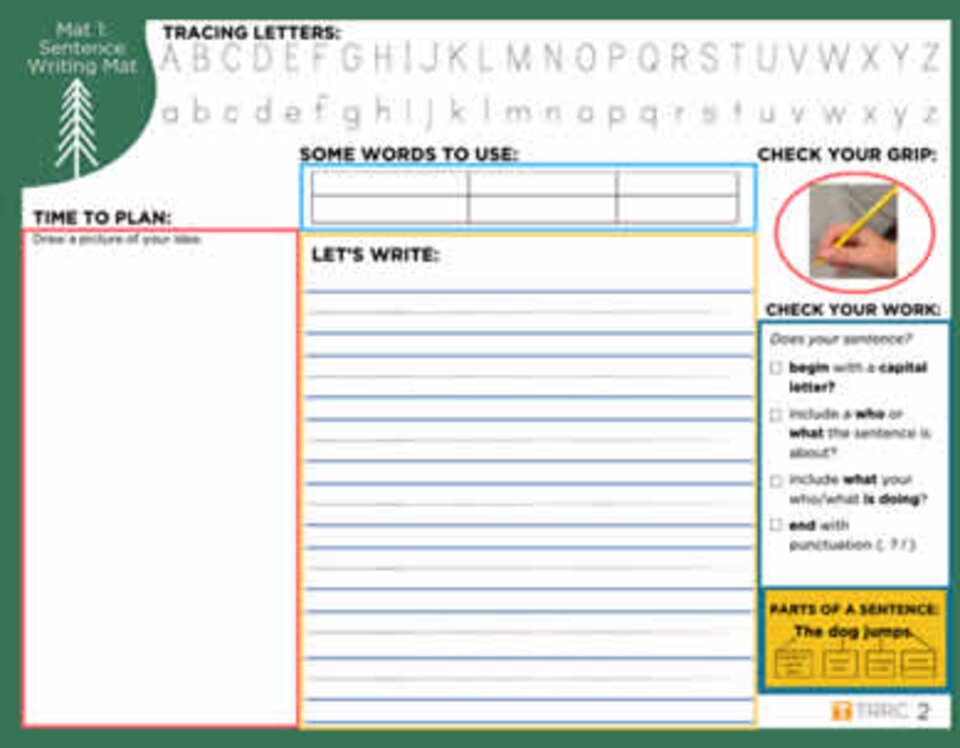
Successful readers and writers integrate component skills (e.g., phonemic awareness, phonics, handwriting, spelling) and high-level literacy processes (e.g., planning, organization, revising) as posited in cognitive literacy-based models. For example, the Not So Simple View of Writing, focuses on the processes of written composition (Berninger & Amtmann, 2003; Berninger et al., 2002). This model suggests that both transcription skills (i.e., handwriting, keyboarding, spelling) and higher-level cognitive processes (i.e., attention, planning, organizing, reviewing, self-monitoring) are necessary to generate text at the word, sentence, and discourse level. Additionally, these skills are constrained by working memory capacity. Thus, deficits in transcription skills may overburden working memory functioning, leading to difficulty with written composition. In this project, Dr. Bazis is working on an intervention that can ease the burden on working memory by providing scaffolded support for sentence -level writing that is accessible by educators and caregivers. Allowing students the opportunity for structured repeated practice in sentence writing skills. Capitalizing on the reciprocal nature of foundational literacy skills to improve reading and writing outcomes for students with writing challenges shows promise. Currently, the instructional writing mats are featured on the Tennessee Reading Research Center (see link below).
Tennessee Reading Research Center Resources Link: https://trrc.utk.edu/resource-library/

The Workshops on Reading Development (WORDS) Project:
Dr. Bazis is the PI of the Nebraska WORDS project and the PI of the IES-funded sub-award. A student’s ability to read is a critical predictor of academic and lifelong success. Early identification of children who may need extra reading support is essential to keep them on a positive trajectory. In partnership with schools across Nebraska, the WORDS Project provides sustained support and professional development to kindergarten through third grade (K-3) teachers — empowering them to deliver effective reading instruction and assessment. The WORDS project is designed to include the following complimentary and intertwined components:
Practice-Based Professional Development (PBPD) for teachers to learn effective reading instructional approaches. The PBPD program will include workshops on foundational reading topics (designed to be distributed across 2 years of the project), year-long instructional support, and activity materials.
One-on-one Teacher Coaching for all classroom teachers in the project. Coaches receive 4-6 coaching sessions throughout the school year. Coaches visit schools to observe teachers in the context of their own classrooms, provide feedback, support goal setting for teachers, act as a thinking partner, and support the use data to drive teachers’ instructional decision making.
Assessment Training and Support for schools, focused on training teachers and administrators how to analyze and interpret reading assessment data and identify students in need of additional reading support. Training will include practice activities and examples for scoring and interpretation of NDE approved assessments.
After-School Tutoring Program including: (a) free high-quality evidence-based tutoring for children (who have an Individualized Reading Intervention Plan) with reading difficulties in after-school and summer programs, and (b) additional opportunities for teachers to implement instructional practices they are learning in the practice-based professional development program. We also include some funds to cover potential transportation for students for the tutoring program.
Literacy Leader Training Reading Leaders in training will develop a project designed to support students’ outcomes in literacy at their school. Project personnel will also work closely with the NDE Reading Specialist to provide support for other NDE reading priorities and align NDE activities with this program.
In partnership with the Kit & Dick Schmoker Reading Center and the Nebraska Department of Education, we are expanding the project to 20 new schools in 2025! Big things are happening with Literacy in Nebraska.
Link to Project Website- https://nebraskawords.unl.edu
Math & Writing Connections Project:
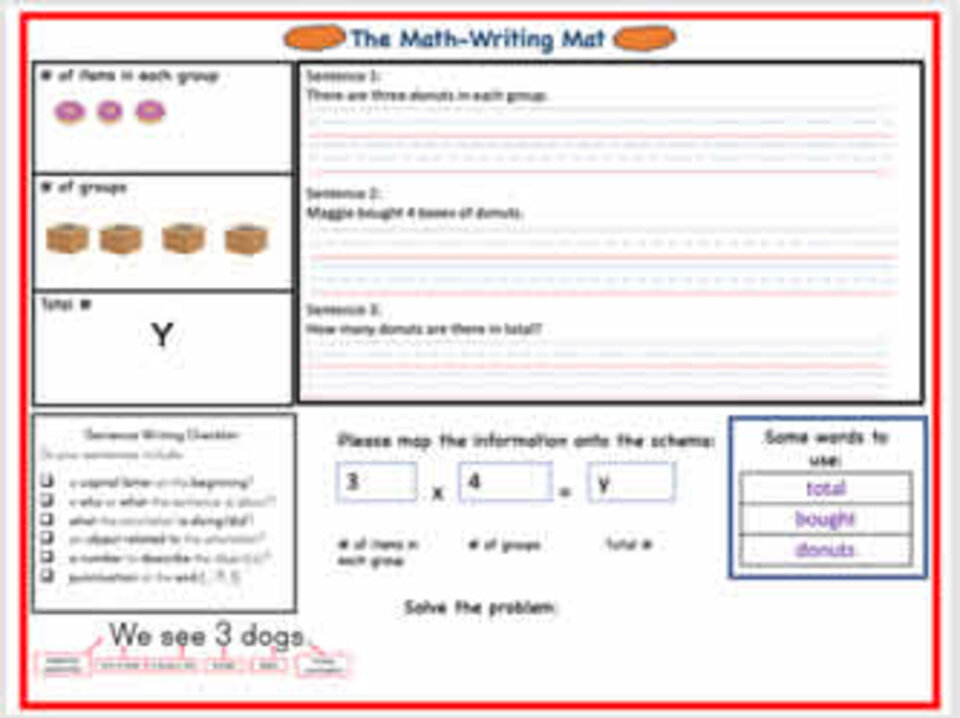
This project is a collaboration between the LIT Lab and Dr. Wang’s Mathematics Lab. Writing about mathematics supports learning specific content and improves overall comprehension. However, the processes involved in mathematical problem-solving and written composition demand significant working memory resources, which can be challenging for students with math and writing difficulties. This study explores how integrating scaffolded support in conceptual model-based problem-solving and sentence composition instruction can benefit students experiencing difficulty in both areas. We examined the effects of an integrated math and writing intervention on elementary students’ skills in solving and posing equal-group word problems, as well as their sentence composition abilities. The results were promising, indicating that all participants demonstrated improved performance in problem-solving, posing, and sentence-composing skills. We will be running a replication study in the spring to set up a new iteration of the intervention in the summer of 2025. Be on the lookout for those studies!